Social Networking vs. Social Media Platforms: What’s the Difference?


- • **Core Difference:** Social networking focuses on relationships, while social media emphasizes creating and sharing content. • **Shared Features:** Many platforms combine profiles, messaging, publishing, discovery, and community interaction. • **Popular Examples:** Facebook, LinkedIn, Instagram, YouTube, TikTok, and Reddit illustrate different platform priorities. • **Business Strategy:** Use networking to develop relationships and content publishing to reach relevant audiences. • **Creator Growth:** Combine discoverable content with meaningful audience interaction. • **Measure Results:** Track relevant connections, engagement, referral traffic, and conversions according to your goals. • **Platform Selection:** Choose services based on your audience, content format, and business objectives.
Social networking vs. social media platforms is a common comparison because the two terms are often used interchangeably, even though they describe different aspects of online interaction. Social networking focuses primarily on building and maintaining relationships between people, while social media platforms provide digital spaces where users can create, publish, share, and discover content. Many modern platforms combine both functions, which makes the distinction less obvious.
Understanding the difference between social networking and social media platforms helps individuals, creators, and businesses choose the right digital channels for communication, content distribution, community building, and marketing. It also explains why some platforms are designed around personal connections, while others emphasize video discovery, public discussions, professional content, or audience engagement.
What Is Social Networking?
Social networking is the process of creating, maintaining, and developing relationships through a network of people or organizations. Online social networking allows users to establish digital connections, communicate with contacts, exchange information, and participate in groups based on shared interests or relationships.

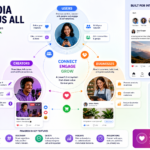
A social networking service typically provides user profiles, connection or following features, messaging, activity updates, and tools for interacting with other members. These features help users maintain relationships even when they are geographically separated.
For example, someone may use a social networking service to keep in touch with relatives, connect with former classmates, meet people who share a hobby, or maintain professional relationships. Businesses can use networking features to communicate with customers, develop industry relationships, and establish connections with potential partners.
The central idea behind social networking is the relationship between users. Content may support these relationships, but the network itself is an important part of the experience.
Read Also:
What Are Social Media Platforms? Types, Examples, and Uses
What Are Content Platforms? Types, Examples, and How They Work
What Are Digital Platforms? Types, Examples, and How They Work
Common Features of Social Networking
Social networking services often include several core features:
- User profiles: Personal or professional pages that represent individuals or organizations.
- Connections and followers: Tools that allow users to establish relationships or subscribe to updates.
- Direct messaging: Private or group communication between connected users.
- Groups and communities: Spaces where people interact around shared interests or goals.
- Activity feeds: Updates showing posts, activities, and information from a user’s network.
- Relationship discovery: Recommendations that help users find contacts, colleagues, or communities.
Not every service includes all these features. However, relationship-building remains a defining characteristic of social networking.
What Are Social Media Platforms?
Social media platforms are digital services that enable users to create, publish, distribute, share, and interact with content. This content may include text, photographs, videos, livestreams, audio, articles, or other forms of digital media.
Unlike a model centered mainly on maintaining existing relationships, social media platforms can emphasize content discovery and distribution. Users may encounter posts from friends and followers, but they can also discover content from unfamiliar creators, publishers, businesses, or public accounts.
For example, a person might watch an educational video on YouTube, discover a new creator on TikTok, browse visual ideas on Pinterest, or participate in a public discussion on Reddit without having an existing relationship with the content’s author.
Social media platforms commonly use feeds, search functions, hashtags, recommendations, comments, reactions, and sharing tools to help users find and interact with content. These systems can allow a post or video to reach people beyond the creator’s immediate network.
Common Features of Social Media Platforms
Social media platforms often provide:
- Content publishing: Tools for creating and uploading posts, photographs, videos, or other media.
- Content discovery: Search, recommendations, topic feeds, and other ways to find material.
- Engagement features: Likes, reactions, comments, shares, and other forms of interaction.
- Audience-building tools: Followers, subscriptions, creator profiles, and community features.
- Analytics: Performance information such as views, reach, engagement, and clicks, depending on the service.
- Monetization options: Advertising, subscriptions, or creator programs where available and subject to eligibility.
These features make social media platforms useful for entertainment, education, marketing, publishing, and public communication. Many also offer extensive social networking capabilities.
Social Networking vs. Social Media Platforms: The Main Differences
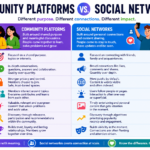
The main difference between social networking and social media platforms is their primary emphasis. Social networking focuses on relationships and connections, whereas social media platforms focus on the creation, distribution, and interaction surrounding digital content.
The distinction is conceptual rather than absolute. A single service can support both activities, and its dominant function may depend on how people use it.
| Comparison | Social Networking | Social Media Platforms |
|---|---|---|
| Primary focus | Building and maintaining relationships | Creating, sharing, and discovering content |
| Main activity | Connecting and communicating with people | Publishing and interacting with digital media |
| Typical features | Profiles, connections, messaging, groups | Posts, videos, feeds, recommendations, sharing |
| Content distribution | Often connected to a user’s network | May extend to audiences beyond existing connections |
| Audience development | Relationship and network growth | Followers, content discovery, and audience reach |
| Common uses | Personal relationships and professional connections | Publishing, entertainment, education, and promotion |
| Business value | Relationship development and direct communication | Content distribution, visibility, and audience engagement |
| Success indicators | Relevant connections and meaningful interactions | Reach, views, engagement, clicks, or conversions |
These differences describe typical priorities rather than fixed rules. For example, a social networking service can support viral content, while a video-focused social media platform can help users build long-term relationships with followers.
How Social Networking and Social Media Overlap
Social networking and social media overlap because relationships and content reinforce each other. People often connect through shared content, while the relationships they establish influence what they publish, share, and discover.
Consider a creator who publishes educational videos. Viewers may discover the videos through recommendations, search, or shares. Some viewers then follow the creator, comment regularly, join a community, or communicate directly. The platform supports content distribution and social networking at the same time.
The same pattern occurs in business. A company may publish product demonstrations to attract attention, answer questions in comments, communicate with customers through messages, and build a community around its services.
This overlap explains why the labels are sometimes used as synonyms. Many popular platforms combine content creation, audience discovery, relationship-building, and messaging within one service.
The most useful approach is therefore to examine what a platform prioritizes rather than relying only on its category name.
Examples of Social Networking and Social Media Platforms
Different platforms illustrate how networking and content distribution can coexist.
Facebook: Networking and Content Sharing
Facebook combines social networking with a broad range of social media features. Users can connect with friends, maintain profiles, join groups, share updates, publish videos, follow pages, and participate in discussions.
Its networking functions help users maintain relationships, while its publishing and discovery features allow content to circulate among friends, followers, groups, and other audiences.
For businesses, Facebook can support community management, customer communication, event promotion, and content distribution. Its usefulness depends on the target audience, the type of content, and the business’s objectives.
LinkedIn: Professional Networking and Publishing
LinkedIn is strongly associated with professional networking. Users build career profiles, connect with colleagues, follow companies, and establish relationships with professionals in their industries.
At the same time, the platform supports social media activities through articles, posts, videos, comments, and content sharing. Professionals and businesses can publish insights that reach people outside their direct connections.
LinkedIn demonstrates how networking can provide the foundation for content distribution. Professional relationships and useful publishing can work together to improve visibility and encourage industry discussions.
Instagram: Visual Social Media and Community Building
Instagram emphasizes visual content, including photographs, short videos, stories, and other media formats. Users can discover creators, follow accounts, interact with posts, and communicate through supported messaging features.
Its content-centered experience can help creators and businesses reach new audiences. Following, commenting, and messaging also support ongoing relationships between users and the accounts they follow.
Instagram is therefore a clear example of a platform where social media and social networking operate together.
YouTube: Content Discovery and Audience Relationships
YouTube primarily emphasizes video publishing, viewing, and discovery. Creators can publish educational material, entertainment, reviews, tutorials, and other video formats.
Viewers can subscribe to channels, comment on videos, participate in live chats, and interact with creators. Recommendation systems and search can also introduce videos to people who have never encountered the channel before.
Although YouTube supports audience relationships, its central experience is strongly organized around video content and discovery. This makes it a useful example of a content-focused social media platform.
TikTok: Content Discovery and Social Interaction
TikTok emphasizes short-form video creation and discovery. Users can publish videos, follow creators, comment, share content, and participate in trends or other forms of interaction.
Its recommendation-driven experience can expose users to videos from accounts they do not already follow. This means content discovery can play a particularly visible role alongside relationship-building.
TikTok also allows creators and businesses to develop audiences, communicate through supported features, and participate in content trends. Its exact capabilities and distribution behavior can change over time.
Reddit: Topic-Based Communities and Discussions
Reddit organizes much of its activity around topic-based communities. Users can submit posts, ask questions, comment on discussions, and participate in communities related to specific interests.
Rather than relying primarily on personal connections, many interactions begin with a shared topic or question. Users may discover a discussion because it is relevant to their interests, even if they have no prior relationship with its participants.
Reddit illustrates how social media can be built around content and community participation rather than a traditional personal network.
Why the Difference Matters for Businesses
Understanding social networking vs. social media platforms can help businesses make better decisions about their digital strategy. The most appropriate approach depends on whether the business needs to develop relationships, distribute content, reach new audiences, or combine these objectives.
When Social Networking Is the Priority
A business may prioritize networking when its success depends on trust, professional relationships, repeat communication, or direct contact with customers and partners.
For example, a consulting firm may use LinkedIn to connect with decision-makers, participate in industry discussions, and maintain relationships with potential clients. A local organization may use a community group to coordinate activities and communicate with members.
In these situations, the value of the platform comes partly from the quality and relevance of the relationships established through it.
When Content Distribution Is the Priority
A business may emphasize social media publishing when it wants to increase awareness, educate audiences, demonstrate products, or bring visitors to its website.
A software company might publish tutorials and demonstrations on YouTube. A design business might share visual examples on Instagram or Pinterest. A publisher might distribute article excerpts through several social media channels to help readers discover its work.
The objective is not simply to collect connections. It is to make relevant content available to the people most likely to benefit from it.
When Both Functions Are Important
Many businesses need both networking and content distribution. A useful content strategy can attract attention, while regular interaction can turn interested viewers into repeat followers, customers, or community members.
A business could publish educational posts, answer questions, join relevant discussions, and communicate directly with interested users. Over time, these activities may strengthen both audience reach and relationships.
However, businesses should not assume that a large follower count automatically produces sales or strong relationships. Results depend on audience relevance, content quality, the offer, and how effectively the business responds to users.
Social Networking vs. Social Media for Creators
Creators also benefit from understanding the difference between the two concepts.
Social media platforms can help creators distribute their work and introduce it to new audiences. Videos, articles, photographs, livestreams, and other content can reach people through recommendations, search, sharing, or subscriptions.
Social networking helps creators maintain relationships with their audiences. Comments, messages, community spaces, and recurring interactions can encourage people to return and participate.
A creator who focuses only on publishing may attract views without developing a strong community. Conversely, someone who builds relationships without consistently providing useful or interesting content may struggle to attract new audiences.
A balanced approach combines discoverable content with meaningful interaction. Creators can use public platforms to attract attention and appropriate community or communication channels to maintain ongoing relationships.
Monetization opportunities may include advertising, sponsorships, subscriptions, products, or services. Availability and eligibility vary by platform, location, and current program terms, so creators should verify the rules of each service before planning around a particular revenue source.
How to Choose Between Social Networking and Social Media
In practice, individuals and businesses rarely need to choose one concept and reject the other. Instead, they should select platforms according to their objectives and understand which functions matter most.
Start with the goal. Decide whether the priority is maintaining relationships, distributing content, discovering new audiences, generating leads, or supporting a community.
Identify the intended audience. Consider where that audience already participates and what kind of content or interaction it expects.
Match the format to the platform. Professional discussions may be suitable for LinkedIn, long-form video may fit YouTube, and visual discovery may work well on Instagram or Pinterest.
Measure meaningful results. Relationship-focused activities may be evaluated through relevant connections, conversations, and community participation. Content-focused activities may be assessed through reach, views, engagement, referral traffic, and conversions.
Review the strategy over time. Platform features, user behavior, and distribution systems change. Businesses and creators should periodically evaluate whether their chosen channels continue to serve their goals.
Using a small number of relevant platforms consistently is often more practical than attempting to maintain an active presence everywhere.
The Role of Social Platforms in the Digital Platform Ecosystem
Social networking and social media are important parts of the broader digital platform ecosystem. Other categories include e-commerce platforms, content platforms, financial and payment platforms, transportation platforms, and business collaboration platforms.
Each category emphasizes a different type of value. E-commerce platforms facilitate commercial transactions, collaboration platforms help teams coordinate work, and digital payment platforms support the movement of money. Social platforms focus on communication, relationships, content, and communities.
These categories can overlap. A social media service may incorporate shopping tools, while a professional networking platform may include publishing and recruitment features. The boundaries are not always strict because digital services evolve to meet multiple user needs.
For a broader overview of how these services fit together, see What Are Digital Platforms? Types, Examples, and How They Work. Readers interested specifically in publishing and content distribution can also explore What Are Content Platforms? Types, Examples, and How They Work.
Social networking vs. social media platforms is best understood as a difference in emphasis rather than a strict separation between two unrelated technologies. Social networking centers on establishing and maintaining relationships, while social media platforms emphasize creating, sharing, discovering, and interacting with digital content.
Many services combine both functions. Facebook supports relationships and content sharing, LinkedIn combines professional networking with publishing, and platforms such as Instagram, YouTube, and TikTok help creators distribute content while building audiences.
For businesses and creators, the practical lesson is to choose platforms based on their objectives. Relationship-building may be essential for trust and long-term communication, while content distribution can help introduce ideas, products, and services to new audiences. A strategy that combines useful content with meaningful interaction can make better use of both capabilities.
Understanding this distinction also provides a clearer view of the wider digital platform ecosystem, where different services connect users, distribute information, and create value in different ways.