

- • **Platform Basics:** How social media platforms connect users and enable content sharing. • **Main Types:** Social networking, media sharing, professional networking, messaging, and online communities. • **Popular Examples:** Facebook, Instagram, YouTube, TikTok, LinkedIn, Reddit, Pinterest, WhatsApp, and Discord. • **Business Uses:** Brand awareness, content distribution, customer support, advertising, and community development. • **Revenue Models:** Advertising, subscriptions, creator monetization, and business services. • **Key Challenges:** Privacy, misinformation, competition, algorithm changes, and moderation. • **Choosing a Platform:** Match your audience, content format, and goals to the right service.
Social media platforms are digital services that allow people, businesses, creators, and organizations to communicate, share content, build communities, and interact online. From sharing personal updates and watching short videos to promoting products and managing customer relationships, social media platforms have become an important part of how people connect and how businesses reach their audiences.
Understanding what social media platforms are, how they work, and what makes each type different can help individuals and organizations choose the right platforms for their goals. Although many services combine several features, social media platforms generally differ in their primary purpose, content formats, audience behavior, and business models.
What Are Social Media Platforms?
Social media platforms are online environments where users can create profiles, publish or share content, follow other users, and participate in digital interactions. Depending on the service, users may communicate through text, images, videos, livestreams, private messages, discussion threads, or community groups.



Unlike traditional media, where communication often flows from a publisher to an audience, social media enables users to participate in the creation and distribution of content. A person can publish a video, receive comments, respond to followers, and reach people beyond their immediate social circle. Businesses can also use these platforms to communicate with customers, promote products, and learn from audience feedback.
Most social media platforms rely on a combination of user accounts, content publishing tools, social connections, recommendation systems, and engagement features. These components help users discover material and interact with people or organizations that match their interests.
However, not every social media platform works in the same way. Some focus on personal relationships, others emphasize professional networking, visual inspiration, entertainment, or public discussion. Understanding these differences is essential when selecting a platform for a particular purpose.
Read Also:
What Are Digital Platforms? Types, Examples, and How They Work
What Are Ecommerce Platforms? Types, Examples, and How They Work
What Are Content Platforms? Types, Examples, and How They Work
How Do Social Media Platforms Work?
Social media platforms connect users through digital accounts and systems that make content available to selected audiences or the public. While individual features vary, most platforms follow a similar general process.
1. Users Create Accounts and Profiles
Users typically begin by creating an account and setting up a profile. The profile may include a name, photograph, biography, professional information, interests, or links to other websites. The information displayed depends on the platform and the user’s privacy settings.
Personal profiles help individuals establish an online presence, while business and creator accounts may provide additional tools for publishing, advertising, and analyzing performance.
2. Users Create and Share Content
Once an account is established, users can publish content in formats supported by the platform. These may include text posts, photographs, videos, stories, livestreams, articles, polls, or longer discussions.
Content can be shared with friends, followers, group members, professional connections, or a wider public audience. Some platforms also allow users to repost material created by others, helping content travel through networks of connected accounts.
3. Platforms Connect Users Through Social Interactions
Social interactions are central to the operation of social media platforms. Users may follow accounts, send messages, comment on posts, react to content, join groups, or participate in discussions.
These interactions create relationships between users and provide signals about the content and communities that interest them. They can also help creators develop loyal audiences and allow businesses to maintain direct communication with customers.
4. Recommendation Systems Help Users Discover Content
Many social media platforms use recommendation systems to suggest posts, videos, accounts, and communities. Recommendations may depend on factors such as a user’s activity, followed accounts, viewing behavior, content characteristics, and previous interactions.
This means users may discover content from people they do not already follow. For creators and businesses, recommendations can provide opportunities to reach new audiences, although visibility is never guaranteed and platform systems can change.
5. Platforms Measure Engagement and Activity
Social media services collect and display different forms of performance data. Depending on the account type and platform, these may include views, reach, impressions, comments, shares, follower growth, watch time, and link clicks.
Creators use these insights to understand how audiences respond to their content. Businesses may use them to evaluate campaigns, identify popular topics, and improve their communication strategies.
Types of Social Media Platforms
Social media platforms can be grouped according to their main purpose and the type of interaction they encourage. These categories sometimes overlap because a single service may combine video, messaging, professional networking, and community features.
1. Social Networking Platforms
Social networking platforms focus on helping people establish and maintain connections with friends, relatives, colleagues, and other users. Profiles, friend or follower relationships, personal updates, groups, and messaging are common features.
Facebook is a familiar example because it supports personal profiles, pages, groups, events, and content sharing. Other services also combine networking features with professional or interest-based communities.
People use social networking platforms to maintain relationships, exchange information, organize events, and follow updates from individuals and organizations. Businesses may use them to build brand awareness and communicate with customers.
2. Media-Sharing Platforms
Media-sharing platforms emphasize visual or audiovisual content, including photographs, short videos, long-form videos, and livestreams. Their main purpose is to help users publish, discover, and interact with media.
Instagram focuses strongly on photographs, short videos, stories, and visual communication. YouTube supports video publishing across many subjects, while TikTok emphasizes short-form video discovery and creation.
These platforms are useful for entertainment, education, product demonstrations, tutorials, storytelling, and creator-led content. Their discovery features can also help publishers reach audiences who have not previously encountered their work.
3. Professional Networking Platforms
Professional networking platforms help users establish work-related relationships, present their experience, discuss industry topics, and discover career or business opportunities.
LinkedIn is a prominent example. Users can maintain professional profiles, publish articles and updates, follow companies, participate in discussions, and connect with colleagues or potential employers.
Businesses can use professional networking platforms for recruitment, industry communication, business development, and thought leadership. Individuals may use them to showcase expertise, learn about their fields, and expand professional networks.
4. Discussion and Community Platforms
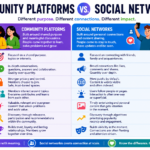
Discussion and community platforms bring people together around shared interests, questions, activities, or experiences. They often organize conversations through topics, channels, forums, groups, or dedicated communities.
Reddit, for example, organizes many discussions into topic-based communities. Discord supports servers and channels where members can communicate through text, voice, and other shared activities.
These platforms can help users exchange practical knowledge, ask questions, obtain feedback, and build relationships around common interests. Organizations may also use communities to support customers, gather feedback, or maintain contact with their audiences.
5. Messaging and Communication Platforms
Messaging platforms focus on direct communication between individuals and groups. Common features include private messages, group chats, voice calls, video calls, file sharing, and community announcements.
WhatsApp and Telegram are examples of services that support messaging alongside additional social and group features. Depending on the service, users can communicate with personal contacts, join larger communities, or follow channels that distribute updates.
Messaging platforms are particularly useful for conversations that require a more direct or private form of communication. Businesses may also use supported messaging features for customer service, appointment coordination, and customer updates, subject to each service’s rules.
6. Social Bookmarking and Content Discovery Platforms
Social bookmarking and content discovery platforms help users find, save, organize, and share material that matches their interests. Their features may include visual collections, saved links, topic feeds, recommendations, or curated boards.
Pinterest is an example of a platform used to discover and organize visual ideas related to design, fashion, home projects, recipes, and other interests.
These platforms can be valuable for publishers and businesses whose content answers specific needs or provides inspiration. Users may discover an idea, save it for later, and visit the original website when they want more information.
Popular Social Media Platforms and Their Uses
Different social media platforms attract different audiences and encourage different behaviors. Choosing the right one requires understanding the type of content users expect and the purpose for which the service is commonly used.
| Platform | Main focus | Common uses |
|---|---|---|
| Social networking and communities | Groups, updates, events, and business pages | |
| Visual content and short videos | Brand storytelling, photography, and creator content | |
| YouTube | Video publishing and discovery | Tutorials, entertainment, education, and reviews |
| TikTok | Short-form video | Entertainment, trends, discovery, and creative storytelling |
| Professional networking | Career development, recruitment, and industry content | |
| Topic-based discussions | Questions, community discussions, and shared interests | |
| Visual discovery and saving ideas | Inspiration, planning, and content discovery | |
| Messaging and group communication | Private conversations, group coordination, and customer communication | |
| Discord | Interest-based communities | Group discussions, gaming communities, and collaboration |
| Telegram | Messaging and channel-based distribution | Group communication, announcements, and information sharing |
These examples are not interchangeable. A video creator may prioritize YouTube or TikTok, while a business serving professional clients may find LinkedIn more suitable. A publisher focused on visual inspiration may benefit from Pinterest, while an organization building a dedicated community may consider Discord or another community-oriented service.
The best choice depends on the intended audience, the content format, the resources available, and the results the user wants to achieve.
How Businesses Use Social Media Platforms
Social media platforms are not limited to personal communication. They have become important tools for businesses that want to communicate with audiences, promote products, distribute content, and develop customer relationships.
Brand Awareness and Audience Reach
Businesses can use social media to introduce their products, explain their services, and establish a recognizable identity. Regular, relevant publishing can help audiences become familiar with a brand over time.
The potential reach of a post depends on several factors, including audience interest, content quality, distribution systems, and whether paid promotion is used. Publishing content does not automatically guarantee broad exposure.
Content Marketing and Distribution
Companies and independent creators can distribute articles, videos, infographics, announcements, and educational material through social media. These posts may direct interested users to a website, product page, newsletter, or other digital destination.
Social media can therefore complement a company’s website and other digital platforms. The website may serve as the main location for detailed information, while social media helps people discover and discuss that information.
Customer Communication and Support
Businesses can use comments, direct messages, community groups, and other supported features to respond to questions and communicate with customers.
This interaction can reveal common concerns and help companies identify opportunities to improve their products or services. Businesses should also establish clear procedures for handling complaints, protecting customer information, and moving sensitive discussions to appropriate channels.
Advertising and Campaign Measurement
Many social media platforms offer advertising tools that allow eligible advertisers to target audiences using supported criteria. Campaigns may promote products, generate leads, increase awareness, or encourage website visits.
Performance can be measured using metrics such as impressions, reach, clicks, conversions, and advertising costs. The most useful metrics depend on the campaign objective: a campaign designed to build awareness should not be evaluated in exactly the same way as one intended to generate sales.
Community Development
Some businesses use social media to develop communities around their products, services, or areas of expertise. These communities may encourage discussions, share practical knowledge, and allow customers to exchange experiences.
A strong community can support long-term relationships, but it requires consistent participation, useful information, and appropriate moderation. Simply creating a group or page does not guarantee an active audience.
How Social Media Platforms Make Money
Although users can often join and use social media platforms without paying a subscription fee, operating these services requires investment in technology, moderation, security, infrastructure, and product development. Platforms may therefore combine several revenue models.
Advertising
Advertising is a major revenue source for many social media businesses. Advertisers pay to display sponsored content to audiences under the platform’s advertising system.
The platform may use permitted audience and engagement signals to help deliver relevant advertisements and measure campaign performance. The precise advertising options and targeting rules vary by service.
Subscriptions and Premium Features
Some platforms offer paid subscriptions that provide additional features, enhanced account capabilities, or an experience with fewer advertisements. The available benefits depend on the specific service and subscription plan.
Creator Monetization and Revenue Sharing
Eligible creators may be able to earn money through platform-supported programs, advertising revenue sharing, paid subscriptions, gifts, or other monetization features.
Eligibility, availability, and payment arrangements vary by platform, location, account status, and current program terms. Creators should check the applicable requirements rather than assuming that every account can access the same opportunities.
Business Services and Commerce
Some platforms generate revenue through business tools, promotional services, commerce features, or fees associated with particular transactions. These offerings can help businesses reach customers or conduct commercial activities within the platform’s ecosystem.
Not every platform uses all these models, and revenue arrangements can change as services develop.
Benefits of Social Media Platforms
Social media platforms offer several advantages when used with a clear purpose.
Global communication: Users can connect with people and organizations across geographical boundaries, subject to internet access and service availability.
Content discovery: Recommendation systems, hashtags, searches, and community discussions can help users discover material beyond their existing network.
Direct interaction: Comments, messages, and community features create opportunities for conversations between users, creators, and businesses.
Content distribution: Creators and organizations can share material across networks and direct audiences to websites or other destinations.
Audience insights: Available analytics can help users understand engagement and refine their content strategies.
Flexible communication: Different platforms support different formats, allowing users to choose between text, images, videos, livestreams, and direct messaging.
These benefits depend on how the platforms are used. Results can vary according to audience needs, content quality, platform policies, competition, and the consistency of participation.
Challenges and Limitations of Social Media Platforms
Despite their advantages, social media platforms also create challenges for individuals, businesses, and communities.
Privacy and Data Protection
Users may share personal information without fully considering who can access it or how it might be used. Reviewing privacy settings, limiting unnecessary disclosures, and using strong account security practices can reduce some risks.
Businesses also need to handle customer information responsibly and comply with applicable privacy requirements.
Misinformation and Content Quality
Information can spread quickly across social networks, including inaccurate or misleading claims. Users should assess the credibility of sources, check important claims, and distinguish verified information from personal opinion or speculation.
Algorithmic Dependence
Creators and businesses may depend on recommendation systems to reach audiences. Changes in these systems can affect visibility, making it risky to rely on a single platform as the only distribution channel.
Maintaining a website, newsletter, or other appropriate communication channels can help diversify audience access.
Competition and Audience Attention
Large volumes of content compete for users’ attention. Publishing frequently without a clear strategy may not produce meaningful results. Useful, relevant material and a good understanding of the intended audience are generally more sustainable priorities than volume alone.
Harassment and Community Moderation
Public interaction can expose users to spam, abuse, or harmful behavior. Platform moderation tools, reporting mechanisms, clear community guidelines, and appropriate privacy controls can help address these problems, although they cannot eliminate every risk.
How to Choose the Right Social Media Platform
The most suitable social media platform depends on the user’s objective rather than popularity alone.
First, identify the intended audience. Consider their interests, the type of content they consume, and the places where they already participate.
Second, match the content format to the platform. Video-led projects may benefit from video-sharing services, professional discussions may fit professional networks, and visual collections may be suited to discovery platforms.
Third, define a measurable goal. Examples include increasing relevant website visits, improving audience engagement, generating qualified leads, or building an active community. A clear goal makes it easier to decide whether a platform is producing useful results.
Fourth, evaluate the resources required. Each platform may require different production skills, publishing schedules, moderation practices, and communication styles. A small business should choose a manageable number of channels rather than attempting to maintain an active presence everywhere.
Finally, review performance over time. Relevant indicators might include meaningful engagement, referral traffic, audience growth, conversions, or the quality of customer interactions. The correct metrics depend on the objective.
A practical strategy is to begin with one or two suitable platforms, learn how the audience responds, and expand only when there is a clear reason to do so.
Social Media Platforms and the Wider Digital Platform Ecosystem
Social media platforms are one category within the broader digital platform ecosystem. Other categories include e-commerce platforms, content platforms, digital payment platforms, transportation platforms, and business collaboration platforms.
The categories can overlap. A social media service may support shopping features, video publishing, messaging, and payments, while a content platform may include comments, followers, and community tools.
The key distinction is the platform’s primary purpose and how it creates value for users. Social media platforms generally emphasize social interaction, communication, and content sharing. E-commerce platforms focus on commercial transactions, while collaboration platforms emphasize coordinated work and shared tasks.
Understanding these relationships helps explain why digital platforms should not be treated as a single type of service. Their business models, user relationships, technical features, and goals can differ significantly.
For readers exploring the broader subject, the article What Are Digital Platforms? Types, Examples, and How They Work provides a useful starting point for understanding how different categories fit together.
Social media platforms are digital environments that help people communicate, share content, build relationships, and participate in online communities. Their different types serve different purposes, from personal networking and professional development to video discovery, messaging, and interest-based discussions.
For businesses and creators, these platforms can support audience development, content distribution, customer communication, and advertising. However, selecting the right platform requires a clear understanding of the intended audience, the content format, the available resources, and the desired outcomes.
Rather than trying to use every service, individuals and organizations should focus on platforms that align with their goals and evaluate results using meaningful performance indicators. As part of the wider digital platform ecosystem, social media services illustrate how digital technology enables interaction and creates new ways for people and organizations to connect.